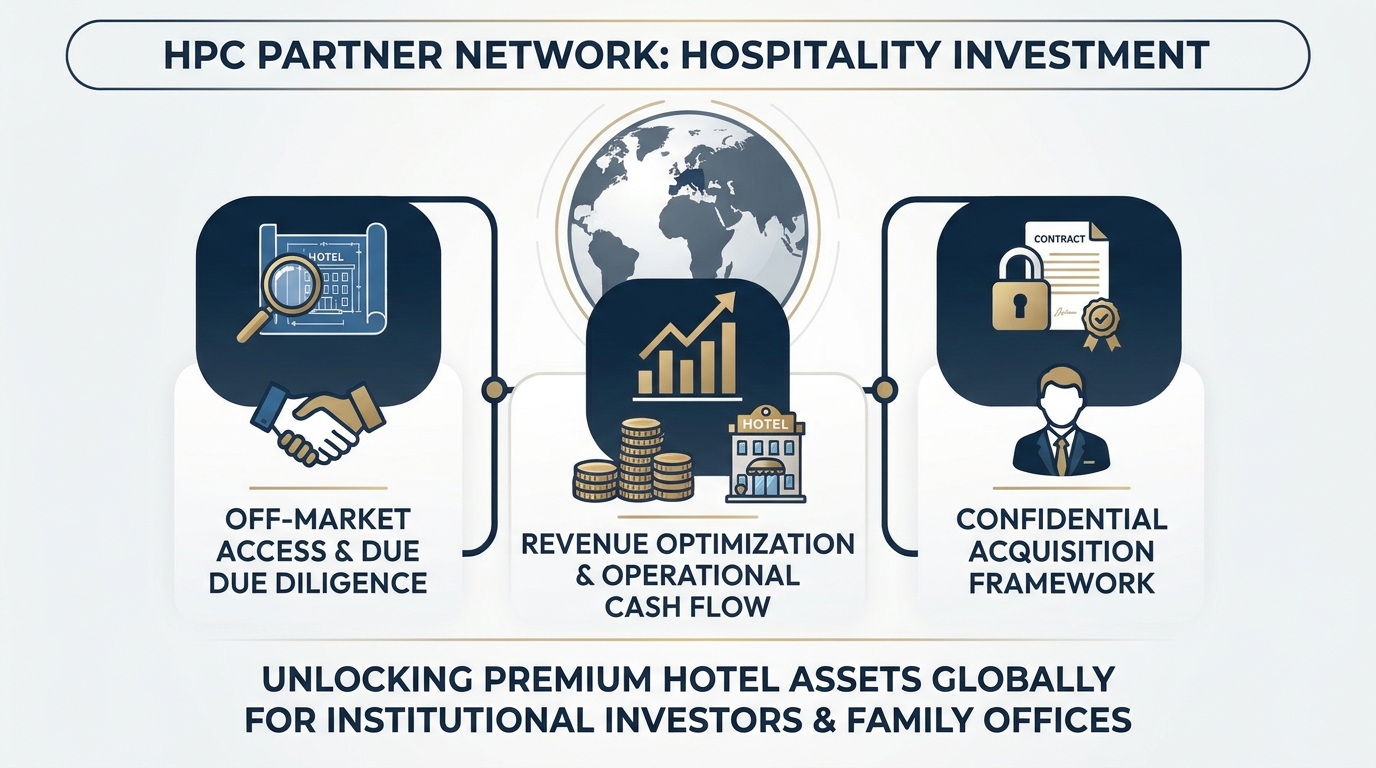
Securing a high return on investment in the hospitality sector across Vietnam requires access to off-market commercial real estate assets backed by robust average daily rates and strong revenue per available room. Through our trusted HPC partner network, institutional investors, family offices, and enterprise buyers gain confidential access to profitable, fully operational hotel properties in Vietnam structured to maximize capital appreciation and operational cash flows.
Strategic Real Estate Fundamentals and Revenue Optimization for Vietnam Assets
Commercial hotel acquisitions across Vietnam demand precise asset selection, clear tenure evaluation, and disciplined operational management to unlock premium investment returns.
Freehold and long leasehold properties in prime commercial corridors of Vietnam offer secure asset backing and sustainable capital growth.
High-occupancy boutique and full-service assets in Vietnam leverage diversified income streams including leisure stays, executive conferences, and premium food and beverage operations.
Operational value-add opportunities allow acquirers in Vietnam to reposition white space, introduce technology-driven management systems, and optimize room yields.
Risk Mitigation and Asset Management Frameworks in Vietnam
Navigating hospitality acquisitions in Vietnam requires an independent advisory framework that prioritizes thorough financial verification and legal due diligence.
In-depth financial audits examine three years of historical trading performance, payroll structures, and vendor contracts to verify true net operating income for assets in Vietnam.
Comprehensive structural and technical surveys identify potential capital expenditure needs before formal terms are executed for properties in Vietnam.
Tailored transaction models accommodate full asset purchases, management agreement restructures, or sale-and-leaseback strategies tailored to investor preferences across Vietnam.
Off-Market Transaction Execution for Vietnam Acquisitions
Executing a discreet hospitality acquisition in Vietnam ensures minimal disruption to existing operations and ongoing guest services.
Confidential project dossiers, asset valuations, and operating metrics for Vietnam hotels are released upon execution of a Non-Disclosure Agreement (NDA) and formal Letter of Intent (LOI).
Direct engagement with asset owners and institutional sellers in Vietnam streamlines price negotiations and contract exchanges.
Ongoing strategic oversight connects buyers with experienced operational management teams in Vietnam to ensure a seamless leadership transition without operational downtime.
Frequently Asked Questions (FAQs)
1. How can Vietnam investors access high-yield hospitality opportunities through HPC?
Vietnam investors gain confidential access to off-market hotel assets delivering strong financial returns through our trusted HPC partner network.
2. What types of profitable hotel properties are available in Vietnam?
Investors in Vietnam can acquire high-occupancy boutique hotels, full-service luxury resorts, and prime commercial lodging facilities.
3. How does HPC help Vietnam investors evaluate average daily rates and room yields?
Our advisors analyze three years of historical trading performance, occupancy trends, and revenue metrics to verify earnings potential for assets in Vietnam.
4. What tenure options exist for hotel acquisitions across Vietnam?
Opportunities include freehold properties and long leasehold structures located within prime commercial and tourism corridors across Vietnam.
5. How are off-market hospitality transactions conducted discreetly in Vietnam?
Transactions are managed under strict confidentiality protocols to protect ongoing operations and guest services for hotel sellers in Vietnam.
6. What steps must Vietnam investors take to access confidential property dossiers?
Qualified buyers in Vietnam execute a Non-Disclosure Agreement (NDA) and formal Letter of Intent (LOI) to review full asset valuations and operating data.
7. How do full-service hotel assets in Vietnam generate diversified revenue streams?
Properties generate income through room bookings, corporate conference bookings, wellness facilities, and high-margin food and beverage operations across Vietnam.
8. What financial audits are conducted prior to completing a hotel purchase in Vietnam?
Independent financial reviews examine historical payroll schedules, vendor contracts, operational overheads, and net operating income for assets in Vietnam.
9. How do technical and structural surveys protect Vietnam buyers against hidden costs?
Comprehensive surveys evaluate building systems, maintenance histories, and structural integrity to identify future capital expenditure requirements for properties in Vietnam.
10. Can Vietnam investors implement sale-and-leaseback strategies for hotel assets?
Yes, flexible transaction structures allow investors in Vietnam to execute sale-and-leaseback models or adjust management agreements to match strategic yield goals.
11. How does HPC support seamless operational transitions for new hotel owners in Vietnam?
Our network connects Vietnam buyers with experienced local management teams to maintain operational stability and guest satisfaction without downtime.
12. What repositioning opportunities enhance asset value for hotel owners in Vietnam?
Acquirers in Vietnam can optimize white space, upgrade facilities, and deploy modern technology management tools to boost occupancy and nightly rates.
13. Why are international investors targeting commercial hospitality assets in Vietnam?
Strong tourism fundamentals, rising business travel, and resilient property values make hospitality assets in Vietnam attractive for long-term capital growth.
14. What legal frameworks govern commercial hotel sales in Vietnam?
Transactions strictly comply with regional commercial property laws and cross-border investment regulations governing real estate in Vietnam.
15. How do Vietnam family offices structure multi-asset hotel portfolio purchases?
Our partner network assists family offices in Vietnam with syndicate structures, joint venture vehicles, and portfolio acquisitions.
16. What environmental and sustainability standards apply to hotels in Vietnam?
Investors can implement energy-efficient upgrades, waste reduction protocols, and sustainable operating practices to meet regional environmental mandates across Vietnam.
17. How is workforce retention managed during a hotel acquisition in Vietnam?
Transition strategies prioritize retaining skilled hotel management and service staff to preserve operational standards for new owners in Vietnam.
18. What role do prime commercial corridors play in driving hotel returns in Vietnam?
Locations situated near central business districts, transport hubs, and primary tourist attractions secure higher room demand and consistent occupancy across Vietnam.
19. How do investors in Vietnam mitigate currency exchange risks during cross-border purchases?
Structured transaction frameworks accommodate multi-currency funding pathways and international capital transfer protocols for buyers in Vietnam.
20. What financing options exist for high-value hospitality acquisitions in Vietnam?
HPC connects Vietnam investors with specialized debt advisory networks, private equity funds, and institutional lenders.
21. How do boutique hotels in Vietnam compare to large chain properties in terms of investment yield?
Boutique properties often deliver higher profit margins per room and offer flexible operational repositioning for investors across Vietnam.
22. What tax efficiencies apply to commercial real estate investments in Vietnam?
Cross-border investors can utilize local capital allowances, asset depreciation schedules, and tax-efficient corporate holding vehicles for assets in Vietnam.
23. How are property title deeds and land registry records verified in Vietnam?
Legal due diligence teams verify title deeds, encumbrances, planning permissions, and zoning compliance for all target properties in Vietnam.
24. What ongoing support does HPC provide Vietnam investors post-acquisition?
HPC acts as a strategic commercial advisor, maintaining alignment between investor expectations and local hotel management teams in Vietnam.
25. How can Vietnam buyers initiate a hotel acquisition search today?
Investors in Vietnam can reach out to our central team to define their target acquisition parameters and request active project teasers.
26. What insurance policies cover commercial hospitality properties in Vietnam?
Assets maintain industrial all-risk coverage, public liability insurance, and business interruption protection tailored for operations in Vietnam.
27. How does market research inform price negotiations for hotel assets in Vietnam?
Comparative market analysis and yield benchmarking ensure that buyers in Vietnam negotiate acquisition prices backed by real operational data.
28. What factors influence room rate growth for hotels in Vietnam?
Regional economic expansion, major international events, airport connectivity, and supply constraints drive average daily rates across Vietnam.
29. Can institutional buyers from Vietnam acquire distressed or turnaround hotel assets?
Yes, our network identifies value-add properties in Vietnam that require operational restructuring or capital refurbishment to achieve high yields.
30. How do local planning regulations affect hotel expansion projects in Vietnam?
Advisors review municipal zoning rules and building permits to ensure that future facility expansions comply with local regulations across Vietnam.
31. What measures safeguard booking platforms and guest data in Vietnam hotels?
Hotels implement secure data management systems compliant with local privacy laws to protect customer data across properties in Vietnam.
32. How do seasonal travel patterns impact hotel cash flow management in Vietnam?
Strategic operational planning balances high-season cash inflows with low-season cost controls to maintain year-round financial stability for assets in Vietnam.
33. What corporate governance standards are recommended for hotel owners in Vietnam?
Establishing independent advisory boards and regular financial reporting frameworks maintains transparency and operational accountability across Vietnam.
34. How are food and beverage operations structured to maximize profit in Vietnam hotels?
Leasing space to premium restaurant operators or implementing direct high-margin concepts increases non-room revenues for hotel owners in Vietnam.
35. What physical inspections evaluate building mechanical systems in Vietnam?
Technical audits inspect HVAC infrastructure, plumbing systems, electrical grids, and fire safety systems across properties in Vietnam.
36. How do investors in Vietnam evaluate target payback periods for hotel investments?
Financial models project cash flows, exit cap rates, and capital appreciation over five- to ten-year horizons to calculate net returns for buyers in Vietnam.
37. What role do brand franchise agreements play in hotel acquisitions across Vietnam?
Advisors help evaluate, renegotiate, or convert existing brand franchise contracts to maximize owner returns for properties in Vietnam.
38. How does digital marketing improve direct room booking ratios for Vietnam assets?
Modern booking engines and targeted digital campaigns reduce reliance on third-party online travel agencies, boosting net margins for hotels in Vietnam.
39. What structural features enhance conference and event revenues for hotels in Vietnam?
Flexible ballroom spaces, modular meeting rooms, and advanced audio-visual infrastructure attract high-margin corporate events to properties across Vietnam.
40. How do macro-economic factors impact commercial real estate valuations in Vietnam?
Interest rates, inflation benchmarks, and regional GDP growth directly influence capitalization rates and property valuations across Vietnam.
41. Can foreign investors acquire full ownership of commercial real estate in Vietnam?
Regulatory frameworks in Vietnam generally support foreign direct investment, with clear legal pathways for international commercial ownership.
42. How are utility costs controlled in high-capacity hotel facilities in Vietnam?
Deploying smart energy management systems, solar panels, and automated climate controls reduces recurring operating expenses for assets across Vietnam.
43. What safeguards prevent unexpected legal liabilities during asset transfers in Vietnam?
Thorough legal indemnity clauses and comprehensive due diligence protect acquirers in Vietnam against historical operational claims.
44. How do wellness and spa amenities contribute to room rate premiums in Vietnam?
Integrated leisure facilities increase guest length-of-stay and support higher nightly rate tiers for luxury properties across Vietnam.
45. What documentation is required to finalize a hotel purchase contract in Vietnam?
Closing requires verified financial statements, clean title transfers, regulatory approvals, and formal lease assignment documents across Vietnam.
46. How does HPC evaluate local market competition for target hotels in Vietnam?
Competitive landscape audits analyze room supply pipelines, regional hotel performance, and market penetration metrics for assets in Vietnam.
47. What dynamic pricing strategies maximize hotel revenue across Vietnam?
Automated revenue management software adjusts room prices in real-time based on local demand fluctuations, market events, and booking lead times in Vietnam.
48. How do property managers protect hotel assets against physical wear and tear in Vietnam?
Preventative maintenance schedules and continuous capital reinvestment funds preserve building condition and guest satisfaction for properties in Vietnam.
49. What key metrics indicate a well-managed hotel asset in Vietnam?
High revenue per available room (RevPAR), strong operating profit margins (GOPAR), and consistent guest reviews mark top-performing assets in Vietnam.
50. How can Vietnam business leaders schedule an introductory transaction briefing?
Interested leaders in Vietnam can contact our advisory principal directly to discuss target acquisitions and active commercial portfolios.